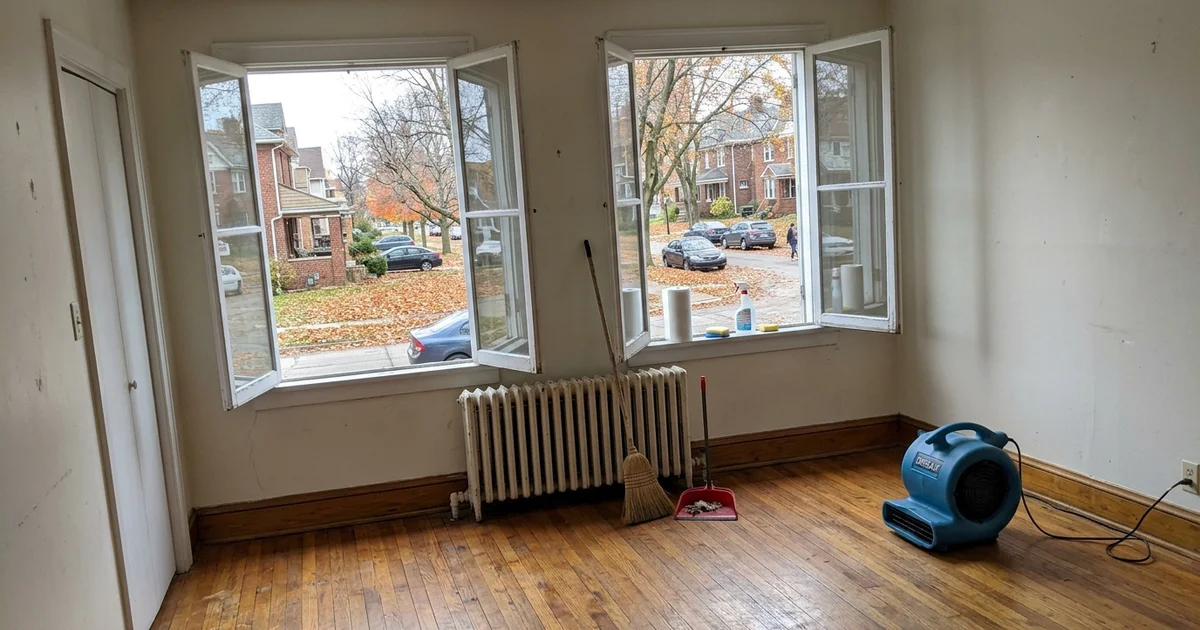
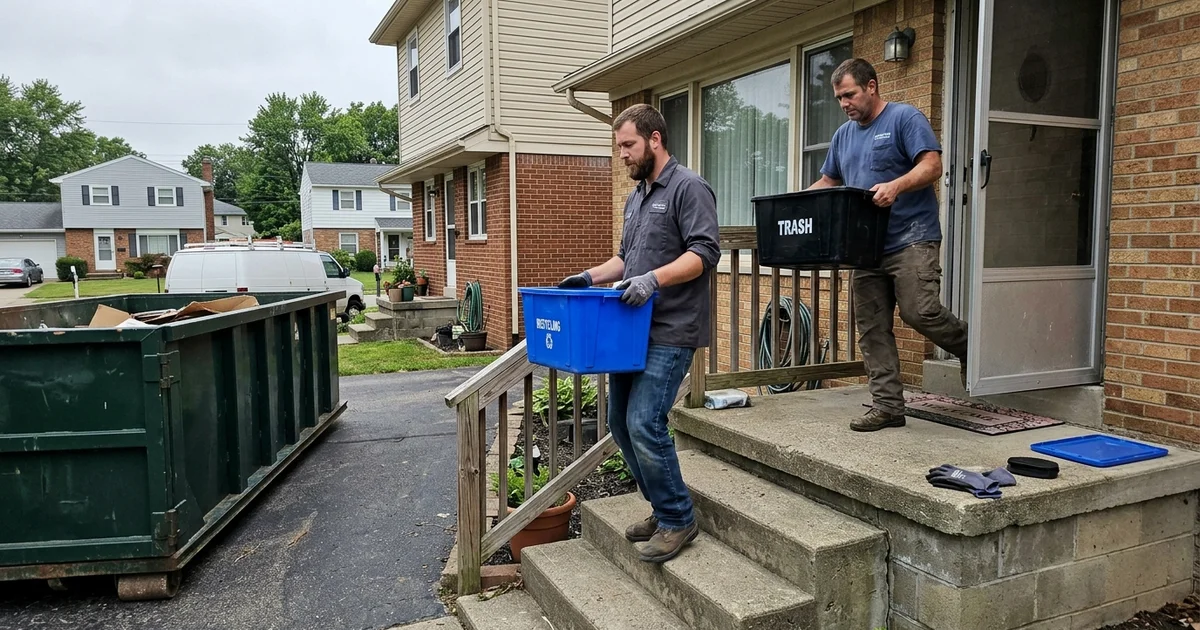
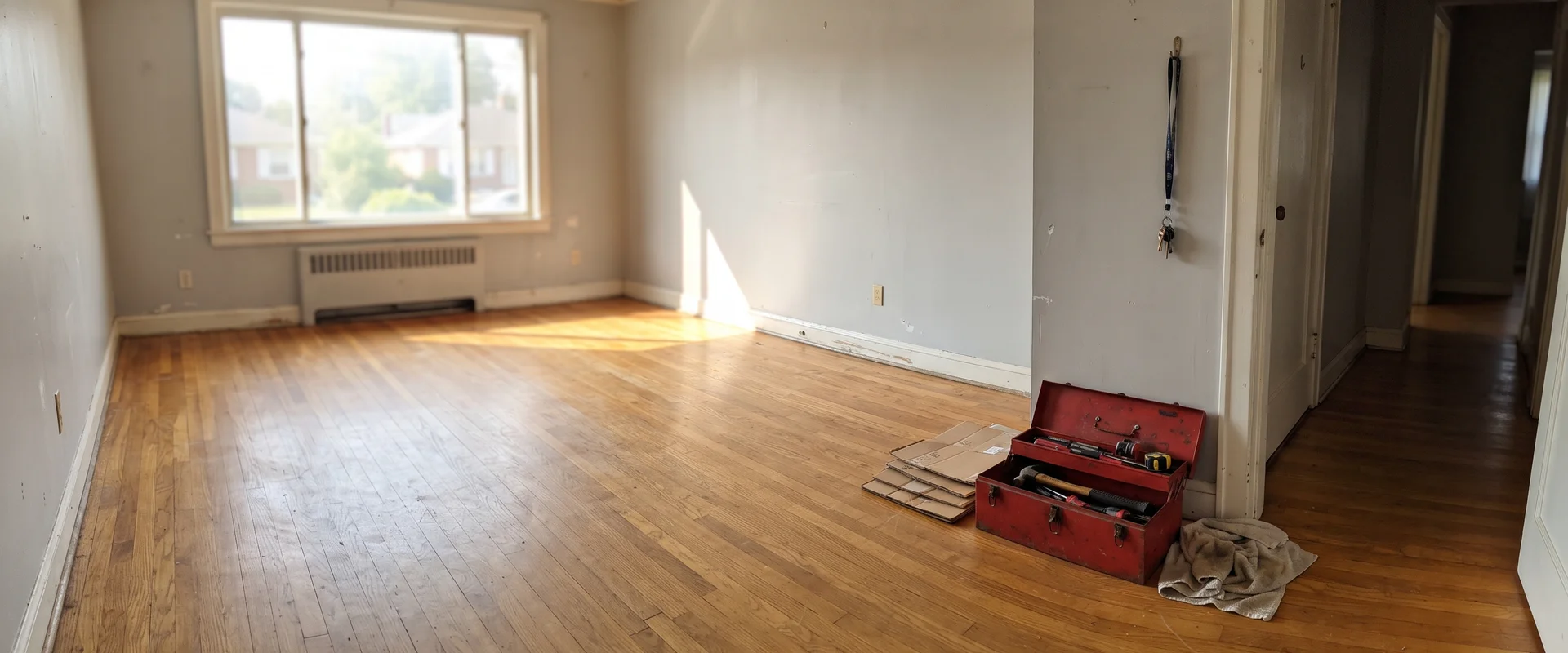
Our Bio-Recovery Technician Academy Is Now Fully Online
We've transitioned our sought-after 5-day in-person academy into a self-paced online certification, opening the biohazard remediation field to students nationwide.
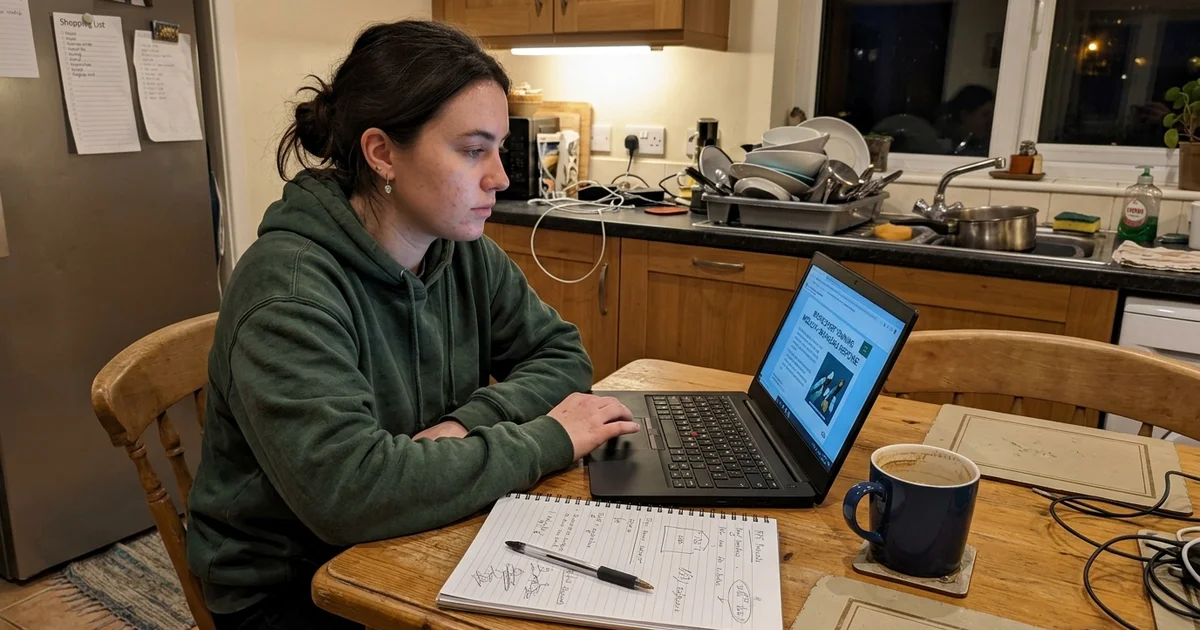
For most of the last decade, if you wanted to train with us, you came to Ohio for five days.
That academy did a great deal of good. Hundreds of technicians came through it, many of whom now run their own companies. It also had a problem we spent years pretending not to notice: it excluded almost everybody who most needed it.
As of this month, the full curriculum is available online, self-paced, for $199. Here is why we made the change and what it actually means for people entering this field. If you are still working out what a bio-recovery technician certification is and what it qualifies you to do, start there first.
The five-day academy had a hidden price tag
The tuition was never the real cost. The real cost was five days of lost income, flights or a long drive, five nights in a hotel, and meals, for someone who by definition did not yet have a business generating revenue.
Add it up honestly and the barrier to entry was several thousand dollars for a week nobody could bill for. The people who could clear that bar were, predictably, people who already had capital. The people who could not were often the exact candidates this industry needs: former healthcare and restoration workers, veterans, people leaving general cleaning who already understood hard work and wanted a trade with a real ceiling.
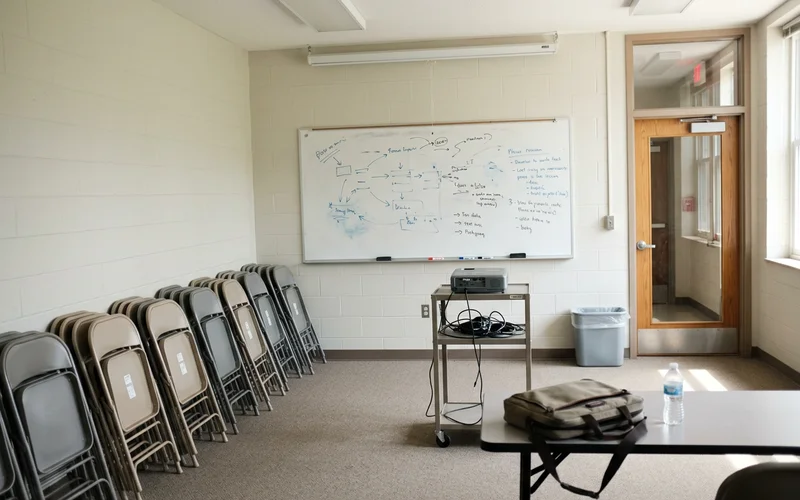
We had a waiting list for years. We also had a long, quiet list of people who inquired once, heard the total cost of attending, and never wrote back. That second list is the reason for this change.
What moved online, and what did not get cut
The curriculum is the same. Seven modules, covering:
| Module | Focus |
|---|---|
| Bloodborne Pathogens | OSHA 29 CFR 1910.1030, HBV, HCV, HIV, MRSA, exposure control |
| HAZWOPER Fundamentals | Hazard recognition, atmospheric monitoring, decon lines, site control |
| PPE Selection & Use | Level B and Level C ensembles, respirator fit, donning and doffing |
| Crime Scene & Trauma | Scene assessment, containment, porous vs non-porous, ATP verification |
| Hoarding & Gross Filth | ICD Clutter-Hoarding Scale, recovery triage, animal waste, subfloor |
| Regulated Medical Waste | Red bag handling, DOT containers, manifesting, chain of custody |
| Starting Your Business | Licensing, insurance, equipment, pricing, finding your first clients |
Nothing was removed to make the online version fit. What changed is delivery. Video and written material replace lecture. Knowledge checks at the end of each module replace the informal questioning we used to do in the room. And critically, you can stop and restart without losing your place, which matters when you are doing this around a night shift. For a module-by-module walkthrough, see what the online crime scene cleanup course covers.
What we honestly lost in the transition
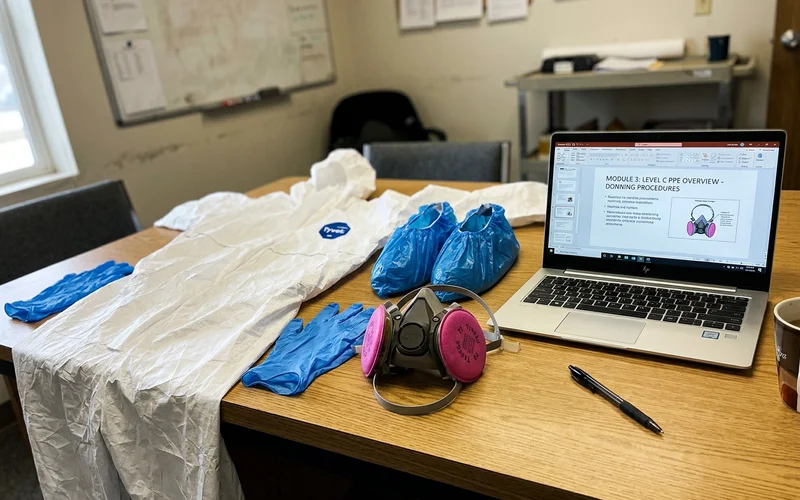
Hands-on donning and doffing practice with an instructor watching is genuinely better in person. Our answer is a far more detailed procedural module with sequence checklists you can print and drill against. It is not identical. It is close, and it is available to people who otherwise would have had nothing. We compare the two formats honestly in online vs in-person crime scene cleanup training.
The business module is the one people write to us about
Most certifications in this field stop at safety and remediation procedure. We think that is a large part of why so many newly certified technicians never actually start.
Knowing how to decontaminate a scene does not tell you what your state requires for licensing, what an insurer will ask for, which $4,000 piece of equipment can wait until job ten, or how to price a job so you are profitable rather than simply busy. We got all of those wrong in our first two years. The business module exists so that you do not have to repeat that particular education.
It covers licensing and insurance requirements and how to check what applies in your state, a realistic day-one equipment list separated from the nice-to-have list, pricing structures that hold up, and where the first genuine customers come from. That last one surprises people, because the answer is rarely advertising. Our guide on how to start a biohazard cleanup business covers the same ground in outline.
Why $199
Because that number gets people in.
The former live rate reflected five days of an instructor’s time, a venue, and consumables. Online delivery does not carry those costs, and we decided to pass essentially all of that saving through rather than keep the old price and improve the margin.
There are no per-module fees, no paywall on your certificate, and no second course you have to buy to make the first one count. The course is frequently promoted at a further 50 to 60 percent discount during enrollment periods.
Who this is for
People with no background in the field are welcome and common. Students come from general cleaning, restoration, healthcare, law enforcement, and from careers entirely unrelated to any of it. The course starts from first principles and assumes nothing.
It is also useful to existing cleaning and restoration operators who keep turning down biohazard calls because they are unsure of the rules. Those calls are profitable, they are in demand across every market, and there are far fewer qualified companies than the demand justifies.
If you want to see the full module breakdown and enroll, the course page has everything, including what each module covers and what you receive on completion.
Ready to start? — See the full bio-recovery technician certification curriculum
Bio-Recovery Technician Training
Self-paced online crime scene cleanup certification covering Bloodborne Pathogens, HAZWOPER, PPE, and how to launch your own biohazard business.
Learn more