What is severe odor removal?
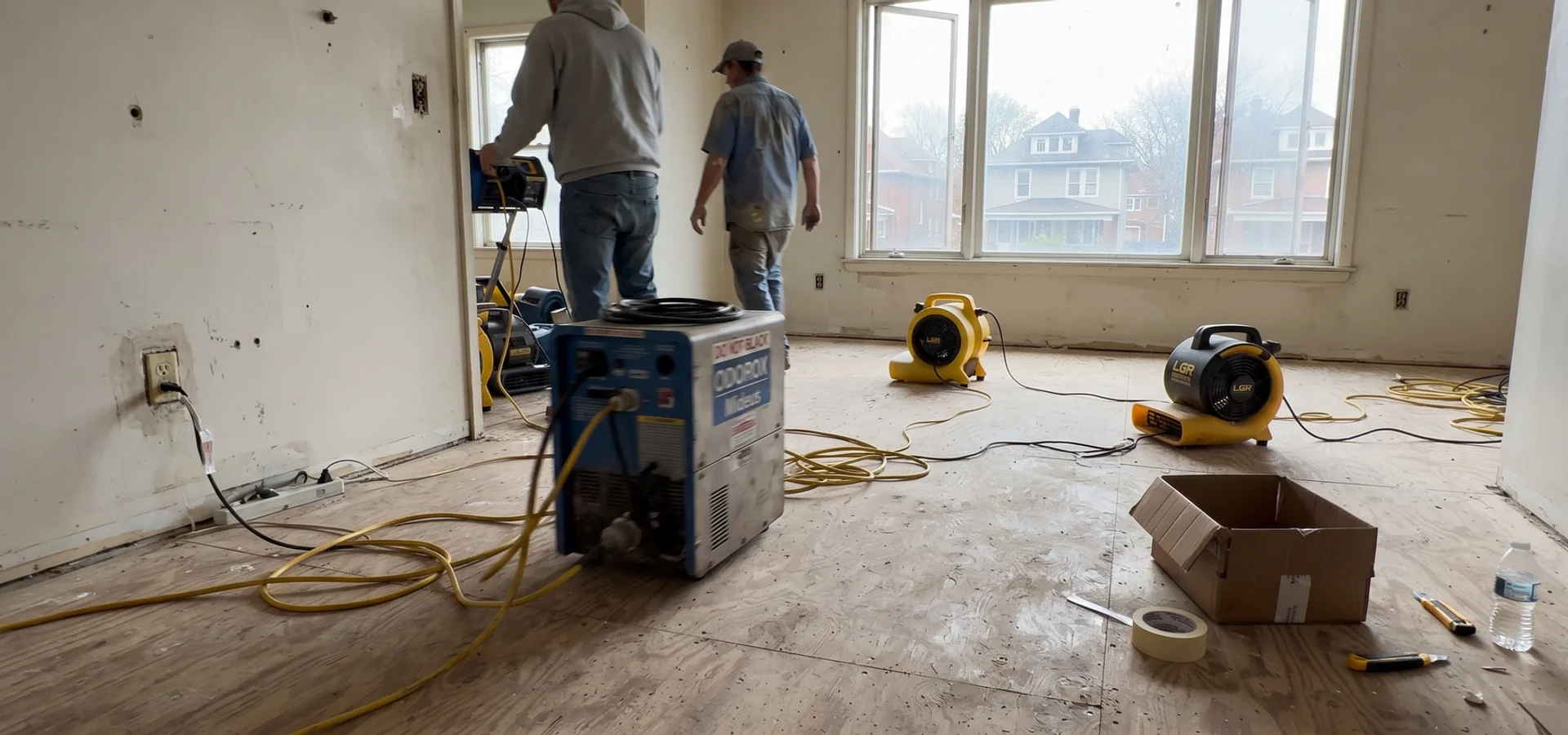
Some odors will not go away with cleaning because the odor molecules have penetrated porous materials and subflooring. Severe odor removal is molecular abatement: identifying and remediating the source first, then using hydroxyl generators, ozone chambering, and thermal fogging to neutralize what remains, sealing subfloors where needed so the result is permanent rather than a temporary mask.
The order matters more than the equipment. Nearly every failed odor job we are called in to fix followed the same pattern: someone treated the air while the saturated carpet padding or subfloor was still in place. The smell disappeared for a week, then came back on the first humid day. Odor molecules held in porous material re-release as temperature and humidity rise, and no amount of air treatment changes that while the source is still nailed down.
This service is used most often by landlords between tenants and by owners preparing a property for sale after decomposition, pet damage, or heavy smoke exposure. In all three cases the outcome that matters is not just neutral air on handover day, it is neutral air three months later during an inspection or a showing, which is the point we make in detail about fall rental turnover across Northeast Ohio. We separate source remediation and air treatment as distinct lines on your estimate so you can see precisely what is being done and why the total looks the way it does.
Where the property is occupied, hydroxyl generators run safely alongside people and pets across longer cycles. Where it is empty, ozone chambering and thermal fogging finish the job faster. Either way, the substrate is sealed with antimicrobial primer first, which is the step that makes the result hold.
Common problems we solve
The smell that came back
Most of our odor calls are second attempts. The fix is almost always the same: pull the flooring, treat the subfloor enzymatically, seal it, then treat the air.
A unit that cannot be re-leased
Prospective tenants walk out of a showing in under a minute when there is an odor. We sequence the work so the unit is ready for your lease date rather than two weeks after it.
Smoke that has bound into the drywall
Long-term cigarette exposure requires sealing before repainting. Painting over it traps nothing and the odor comes through the new coat within weeks.
An HVAC system that keeps redistributing it
Where ductwork has carried odor through a building, treating one room accomplishes little. We assess the system as part of the scope and tell you if it needs attention.
What’s included
- Full source identification, including flooring, subfloor, drywall, and HVAC assessment
- Removal and disposal of saturated porous materials
- Bio-enzymatic deodorization to break down residual odor compounds
- Subfloor encapsulation with antimicrobial primer sealant
- Hydroxyl generator treatment for occupied properties
- Ozone chambering and thermal fogging for unoccupied properties
- Safe ozone protocol management including sealing and ventilation cycles
- Verification before handover and documentation for the next tenant or buyer
How this compares to the alternatives
| The approach | Masking and air treatment alone | Source-first odor removal |
|---|---|---|
| Finding the source | Skipped; the air gets treated | Flooring, subfloor, drywall, and HVAC assessed before anything runs |
| Saturated porous material | Left in place | Removed and disposed of |
| Substrate | Untreated | Bio-enzymatic deodorization, then antimicrobial primer encapsulation |
| Air treatment timing | First and only step | Last step, once the source is gone and sealed |
| How long it holds | Days to weeks, returning with humidity | Permanent, verified before handover |