What is crime scene and biohazard cleanup?
When the unthinkable happens, you should not have to face it alone, and you should certainly not have to clean it yourself. Crime scene and biohazard cleanup is the certified removal, decontamination, and disposal of blood, bodily fluids, and other biological hazards left behind after a homicide, suicide, unattended death, gastrointestinal bleed, or severe accident. It is a regulated trade, not a cleaning service, and the difference matters.
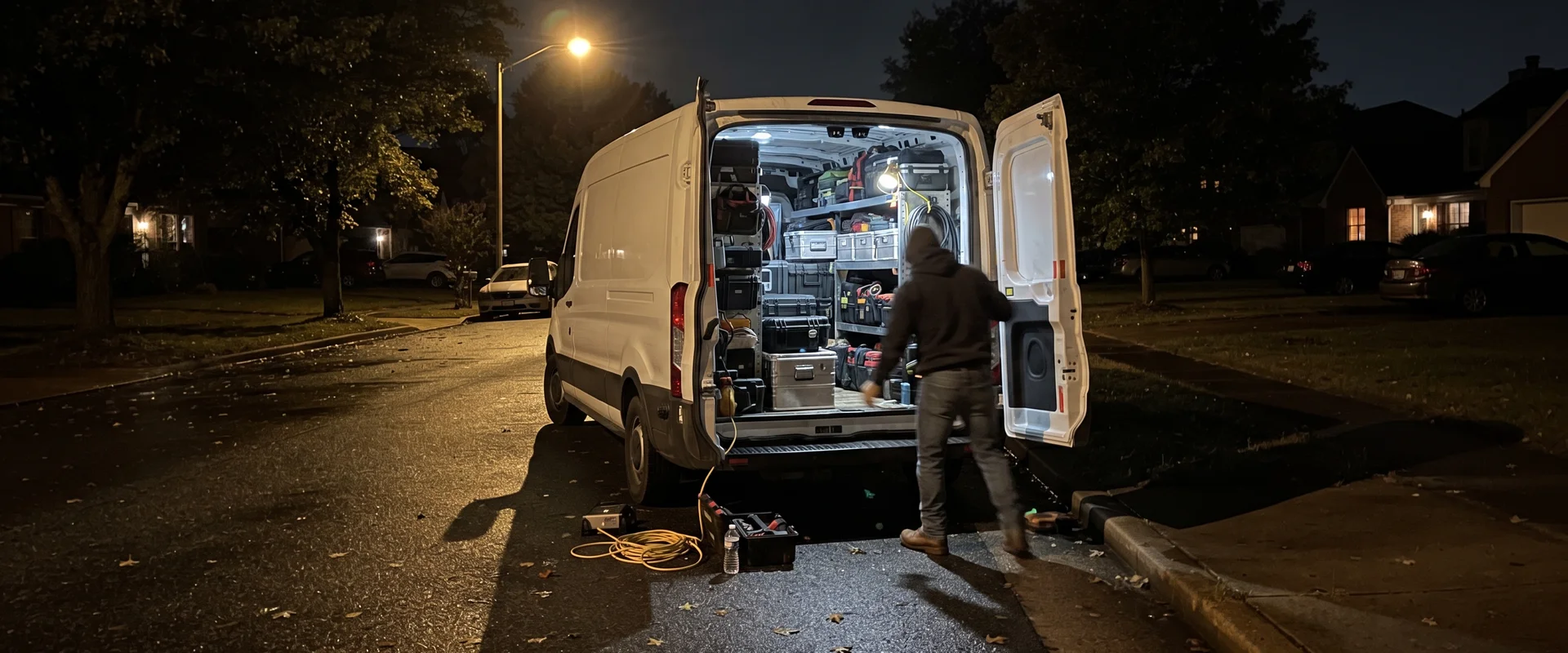
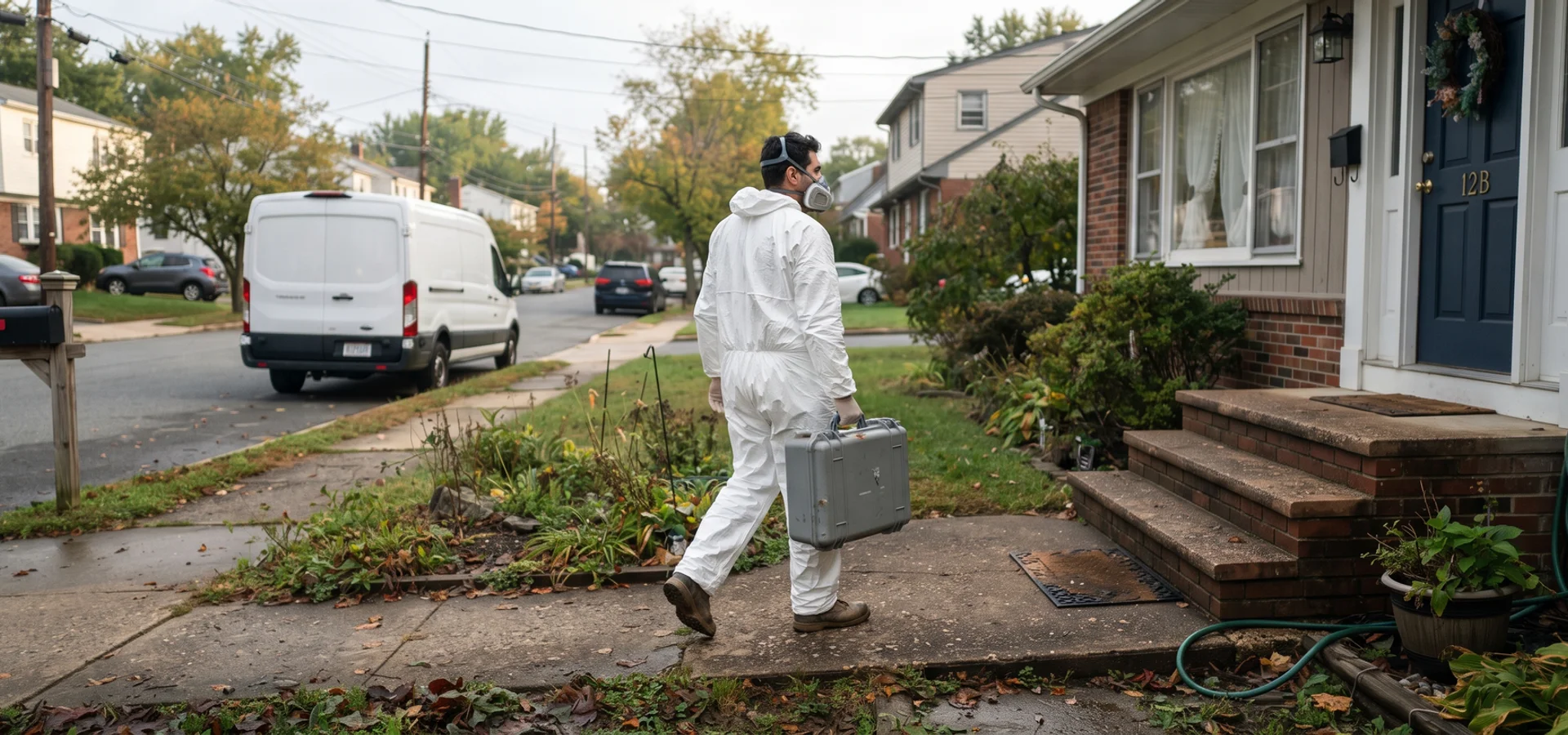
Our technicians are OSHA Bloodborne Pathogens compliant under 29 CFR 1910.1030 and HAZWOPER certified. In practice that means every job runs on a defined protocol: assess the contamination, contain the affected area, remove what cannot be saved, disinfect what can, dispose of everything as Regulated Medical Waste, and verify the result. We dispatch 24 hours a day across Northeast Ohio, arrive in unmarked vehicles, and coordinate scene release with law enforcement and the Cuyahoga County Medical Examiner’s Office when they are involved.
The part most families do not expect is how far contamination travels. Blood and fluids do not stay on the surface. They move through carpet and padding, into plywood or plank subfloor, and sometimes into the joist cavity below. Porous materials cannot be decontaminated and must be removed. Non-porous surfaces are treated with EPA-registered virucides rated against Hepatitis B, Hepatitis C, HIV, and MRSA. Understanding that distinction is the difference between a scene that is genuinely safe and one that only looks clean.
Most of these cleanups are covered by homeowner’s insurance minus your deductible. We help you open the claim, and every photograph, itemized line, and verification result is delivered through our secure Client Portal so your adjuster has a complete record and out-of-state family members can follow along without flying in.
Common problems we solve
Contamination that has reached the subfloor
By the time many families call, fluids have been in contact with flooring for hours or days. Carpet and padding come out, and the subfloor underneath is treated with antimicrobial primer sealant. Skipping this step is the single most common reason odor and contamination return weeks later.
Scenes nobody in the family should walk into
We do not ask you to be present, to point things out, or to help carry anything. If you would rather hand us a key and step away entirely, that is a completely normal request and we will handle it that way.
Uncertainty about who pays
Insurance, the estate, a landlord’s policy, or the Ohio Crime Victims Compensation Program. We tell you which paths apply to your situation and give you the documentation each one requires. You should never have to guess about this while you are grieving.
Odor that outlasts the cleanup
Where decomposition or long-standing contamination is involved, molecular odor treatment follows remediation. Hydroxyl generators and, in unoccupied spaces, ozone chambering neutralize odor at the source rather than covering it.
What’s included
- 24/7 emergency dispatch with rapid response across Cuyahoga, Lorain, and Lake Counties
- Full containment with HEPA air scrubbers and negative air machines
- Removal and Regulated Medical Waste disposal of all contaminated porous materials
- EPA-registered hospital-grade disinfection of every non-porous surface
- Subfloor treatment and antimicrobial primer sealing where fluids have penetrated
- ATP fluorometer verification testing with documented results
- Insurance claim support and before and after reporting through the Client Portal
- Discreet unmarked vehicles and complete confidentiality on every job
How this compares to the alternatives
| Part of the job | Doing it yourself | Professional biohazard cleanup |
|---|---|---|
| Exposure risk | HBV, HCV, and HIV exposure with no respiratory or splash protection | Level B and Level C PPE under an OSHA 29 CFR 1910.1030 exposure control plan |
| Containment | None, so contamination spreads through the property | HEPA air scrubbers and negative air machines isolate the work zone |
| Waste disposal | Household bins, which is unlawful for this material | Regulated Medical Waste containers, manifested and tracked |
| Disinfection | Retail cleaners on visible staining | EPA-registered hospital-grade disinfection of every non-porous surface |
| Confirmation it worked | Assumed | ATP fluorometer verification with documented readings |