
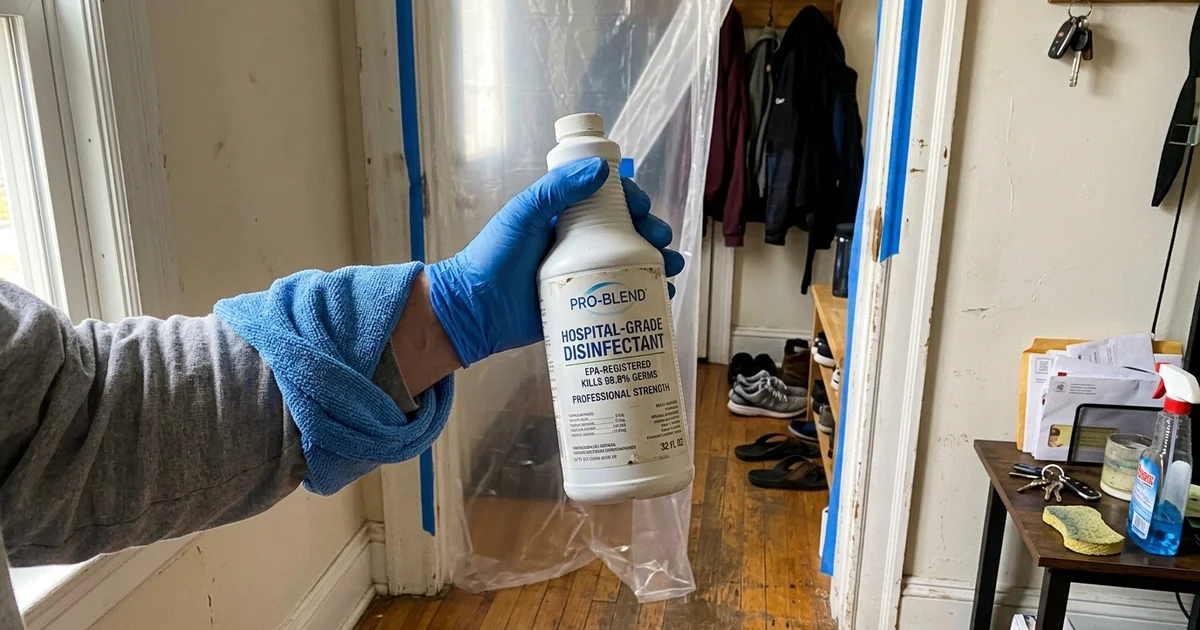
The short answer, and why it matters
Yes. Blood is a biohazard, and so are other bodily fluids. Under the OSHA Bloodborne Pathogens Standard, human blood and other potentially infectious materials are regulated precisely because they can transmit serious disease, and anything they contaminate becomes Regulated Medical Waste.
This is not a technicality invented to justify a service. It is the reason Crime Scene & Biohazard Cleanup exists as a certified trade with its own protocols, its own protective equipment, and its own disposal chain.
Most people find this page because they are standing in a room trying to decide whether to handle something themselves. The honest answer depends entirely on scale, and the rest of this guide is about where that line sits.
What can actually be in it
The pathogens of practical concern in a household or trauma scene are:
| Pathogen | Why it matters |
|---|---|
| Hepatitis B (HBV) | Can survive on a dried surface for up to seven days and is highly infectious |
| Hepatitis C (HCV) | Survives on surfaces for days in the right conditions, no vaccine available |
| HIV | Degrades quickly outside the body but remains a risk in fresh exposure |
| MRSA | Antibiotic-resistant, survives on surfaces, spreads through contact |
| C. difficile | Spore-forming, resistant to many common disinfectants |
A person cleaning without appropriate protection is exposed through cuts and abrasions they may not know they have, through mucous membranes when they touch their face, and through aerosolized particles when dried material is disturbed.
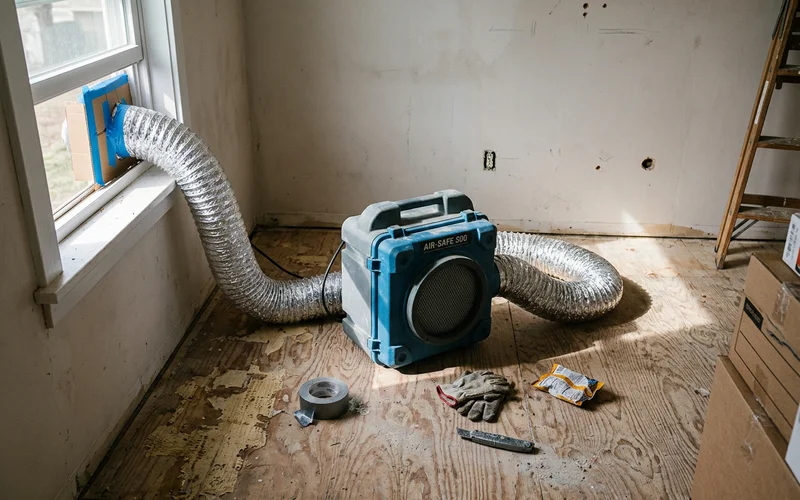
The assumption that causes the most harm
That a dried scene is safer than a fresh one. Drying does not inactivate Hepatitis B or MRSA, and disturbing dried material makes particles airborne. Time passing does not make a room safe.
Why porous materials cannot be cleaned
This is the part that separates biohazard remediation from cleaning, and it is worth understanding even if you never hire anyone.
A non-porous surface such as sealed tile, glass, or finished metal can be genuinely disinfected. The contamination sits on top, an EPA-registered virucide is applied at the correct dilution, it is left wet for the specified contact time, and the surface is decontaminated.
A porous material cannot. Carpet, padding, upholstery, mattresses, untreated wood, drywall, and plank or plywood subfloor absorb fluids into a structure that no surface application reaches. You can clean the top of it indefinitely and the contamination underneath is unchanged. This is also why odor returns weeks later in rooms that were cleaned rather than remediated.
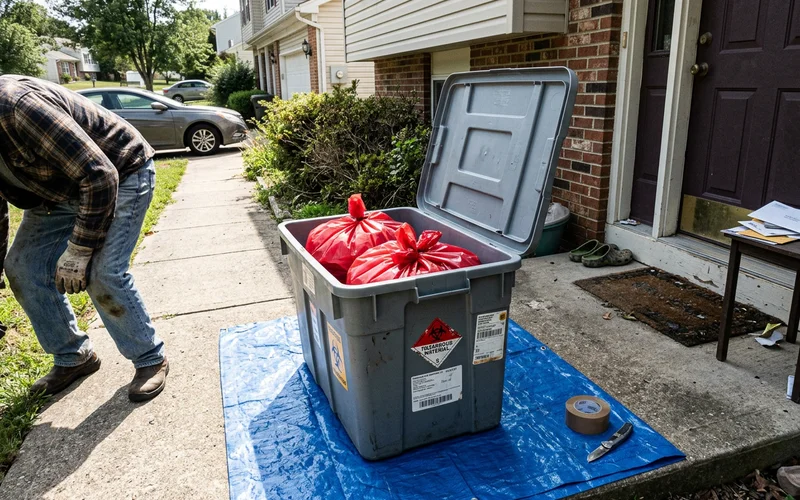
The correct handling is removal. Contaminated porous material is cut back, bagged in biohazard red bags, placed in DOT-approved containers, manifested, and disposed of through a licensed Regulated Medical Waste facility. The substrate beneath is then treated with a bio-enzymatic cleaner and sealed with antimicrobial primer.
Where the DIY line actually sits
We are not going to tell you that a nosebleed on a kitchen counter requires a hazmat crew. It does not.
Reasonable to handle yourself: small volumes on a hard, non-porous, sealed surface, where you have gloves, the material has not soaked into anything absorbent, and there is no reason to suspect infectious disease.
Not reasonable to handle yourself: anything that has soaked into carpet, upholstery, a mattress, or flooring. Anything following a death, a violent incident, or a significant medical event. Anything where volume means you cannot be confident you have found all of it. Anything where the disposal question has an answer you are uncomfortable with.
The disposal question is the one that decides it for most people. If your plan involves a household bin, that is where the plan stops.
Verification is the part you should ask about
A cleaned surface and a decontaminated surface look identical. Professionals close that gap with ATP fluorometer testing, which swabs a surface and returns a numeric reading of residual organic material. It converts a judgment call into data, and it is what lets a family be told the space is genuinely safe rather than probably fine.
If you are comparing companies, ask whether they verify and ask to see the readings. It is a short question that filters a lot.
For a fuller comparison of what a professional crew does versus what a homeowner can realistically achieve, our guide on professional versus DIY biohazard cleanup sets the two side by side, including the legal exposure that comes with improper disposal.
If you are unsure which side of the line your situation falls on, call and describe it. We will tell you honestly, including when the answer is that you do not need us.