
The question behind the question
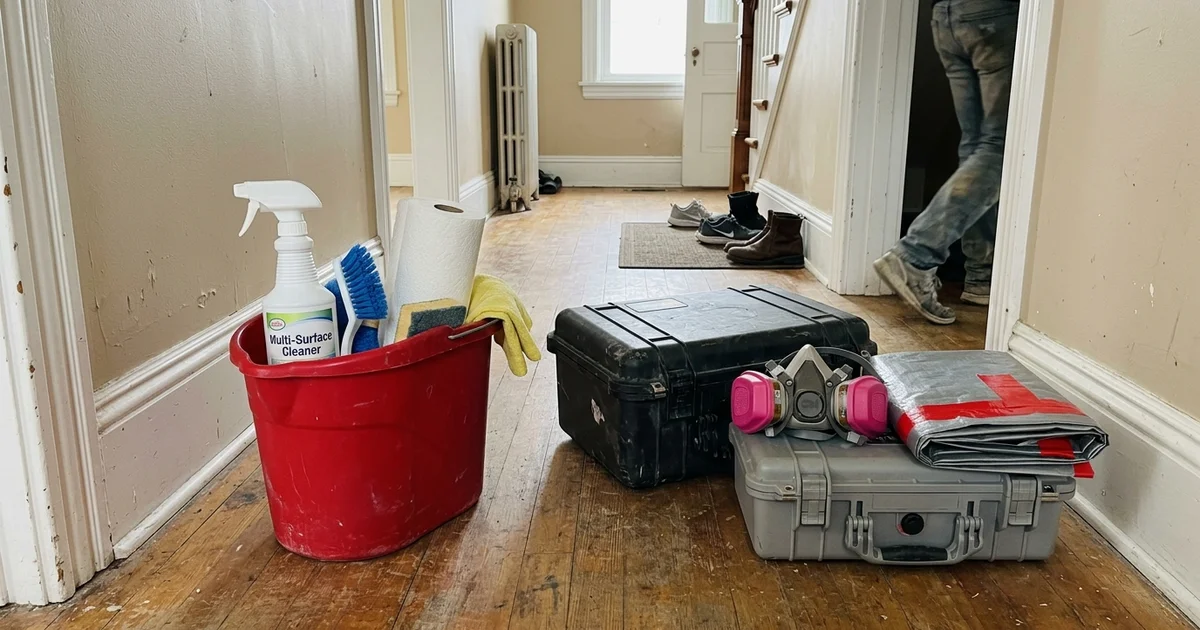
Almost nobody asks this because they want to save money. They ask because it feels like their responsibility, or because the idea of a stranger in that room is worse than the idea of doing it themselves.
So this guide is not a sales argument. It is an honest account of what changes between the two approaches, including where DIY is genuinely reasonable. The professional version of this work is Crime Scene & Biohazard Cleanup, and there are situations where you do not need it.
Where DIY is actually fine
Small volumes of blood on a hard, sealed, non-porous surface. A kitchen counter, a tiled bathroom floor, a sealed laminate. You have gloves, the material has not soaked into anything absorbent, the volume is small enough that you can be confident you have found all of it, and there is no reason to suspect an infectious disease.
In that situation, gloves, a household disinfectant left wet for its full contact time, and careful disposal is a proportionate response. We are not going to pretend otherwise.
Where it stops being fine
The line moves the moment any of these are true: fluid has soaked into carpet, padding, upholstery, a mattress, or flooring. The incident involved a death, a violent event, or a significant medical bleed. The volume is large enough that you cannot be sure where it all went. The property sat for days before discovery. Or the disposal question has an answer you are uncomfortable saying out loud.
That last one decides it for most people, and it is worth sitting with.
The four things that actually differ
1. What gets found
Fluids travel. They move through carpet into padding, through padding into plank or plywood subfloor, and in extended cases into the joist cavity below. A trained crew maps that penetration before quoting, which is why our estimates include subfloor lines that a homeowner would not have thought to look for.
The visible area is almost never the affected area. That is not a sales line, it is the single most consistent finding in this trade.
2. What happens to the material
| DIY | Professional | |
|---|---|---|
| Porous material | Usually cleaned in place, or binned | Removed, bagged in biohazard red bags |
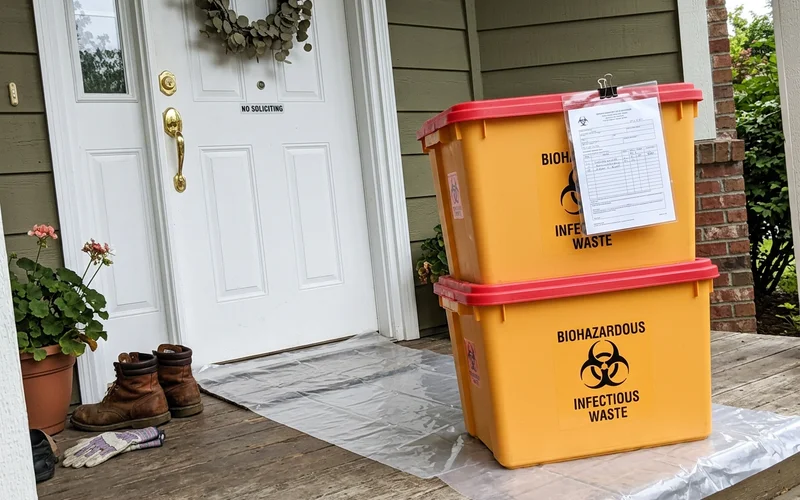
| Disposal | Household bin or skip | DOT-approved containers, manifested |
| Destination | Municipal waste stream | Licensed Regulated Medical Waste facility |
| Record | None | Manifest and chain of custody documentation |
Improper disposal of Regulated Medical Waste carries genuine legal exposure, and the paperwork trail is not optional at the professional end. This is the reason a remediation company cannot simply be underbid by someone with a van.
3. Protection during the work
Certified technicians work under the OSHA Bloodborne Pathogens Standard with Level B or Level C ensembles, fit-tested respiratory protection, a defined donning and doffing sequence, and a decontamination line on the way out. Containment and HEPA negative air stop anything migrating into the rest of the property while the work is happening.
A homeowner in nitrile gloves and a dust mask has none of that. Exposure happens through cuts you did not know you had, through touching your face, and through disturbing dried material that becomes airborne.
4. Proof at the end
This is the one people underweight and it is arguably the most important.
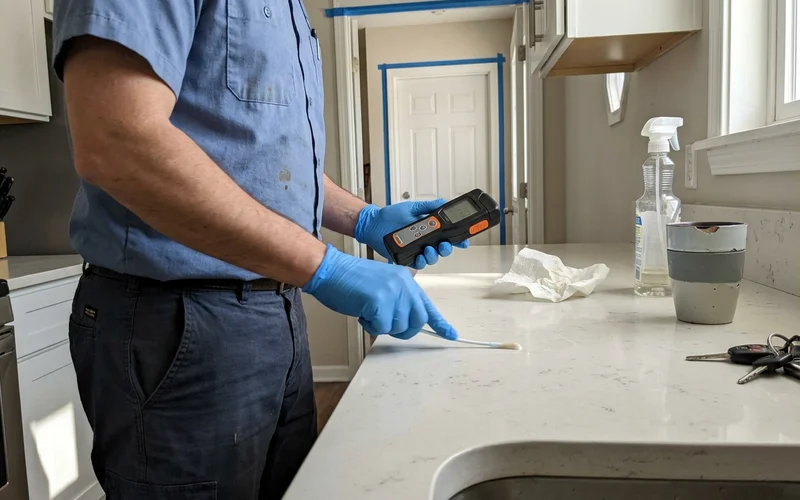
A cleaned surface and a decontaminated surface are visually identical. Professionals close that gap with ATP fluorometer testing: a swab returns a numeric reading of residual organic material, converting a judgment call into data.
If you are comparing companies, ask one question
“Do you verify decontamination, and will I see the readings?” It is short, it is specific, and it filters out a surprising number of operators.
The insurance angle nobody mentions
Most homeowner’s policies in Ohio cover trauma and unattended death remediation minus your deductible. Cleaning it yourself does not just forfeit reimbursement for your own labour, it frequently damages the claim entirely, because the scene condition was never documented before it was disturbed.
Adjusters approve scope they can see evidenced. Photographs of the original condition, an itemized scope, disposal manifests, and verification results form the file. If the first photograph is of a room that has already been cleaned, there is very little to assess.
If insurance is likely to respond, calling before you clean is the financially correct move even if you would rather handle it yourself.
The part that is not on a spreadsheet
We have met the families who did it themselves. Some of them are fine. Many of them describe the memory of that afternoon as worse than anything else about the loss, and it surfaces for years.
You are allowed to not do this. Choosing not to clean up after someone you loved is not a failure of duty or of strength. It is a reasonable decision that most people make and almost nobody regrets.
If you want to understand the specific health risks in more depth, our guide on whether blood is a biohazard covers the pathogens involved and how long they survive on a surface.
And if you want a straight answer about whether your particular situation needs a professional, call and describe it. We will tell you when it does not.