
Before the checklist, one thing
If this happened today, you are not behind. Nothing on this list has to be done in the next ten minutes except the first item, and there is no version of this where you handle it wrong by being slow.
This page exists because families tell us the hardest part of the first day was not knowing what the order was. So here is the order, written plainly, for Ohio. Everything below step two eventually leads to Crime Scene & Biohazard Cleanup, but none of that has to be decided today.
Step 1: Notify the right people
If the death was unexpected, unattended, or the circumstances are unclear: call 911. Police will attend and, where required, the Cuyahoga County Medical Examiner’s Office will be notified by the responding agency. You do not need to make that call yourself.
If the person was under hospice care: call the hospice line rather than 911. They have a defined process, they will attend, and they will handle the notifications and the pronouncement.
If you are not sure which applies: call 911. Nobody will be annoyed with you.
After that, in no particular rush: immediate family, a funeral home of your choosing, and the person’s employer if relevant. The funeral home coordinates with the medical examiner directly regarding transport.
Do not go back into the room
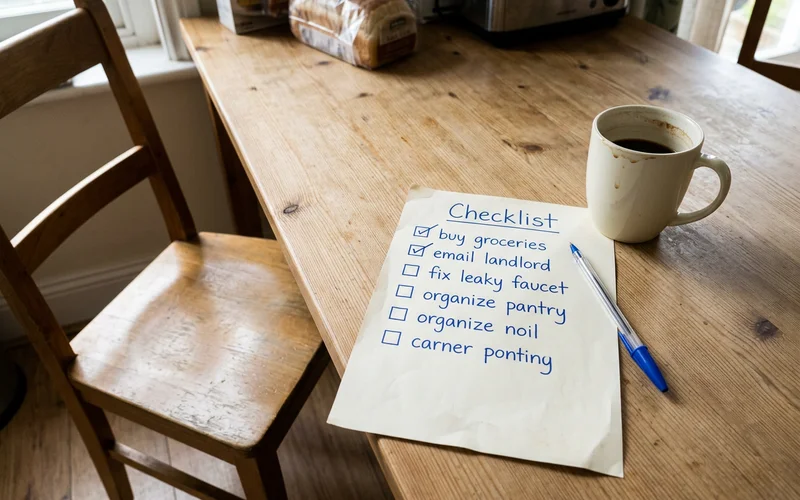
Not to look, not to tidy, not to retrieve something. Until the space is remediated it is a biohazard. Close the door, keep children and pets out, and if you can reach the thermostat, stop the HVAC from pulling air through that part of the house.
Step 2: Understand what happens to the property
This is the part that catches almost everyone.
When the investigation is complete, the property is released back to you exactly as it is. No agency cleans it. Police do not, the medical examiner does not, and emergency services do not. That responsibility sits with the property owner or the next of kin.
The work required is Crime Scene & Biohazard Cleanup, and it is a certified trade rather than a cleaning job. A remediation company can typically begin the same day the scene is released.
Step 3: Call a remediation company, even before you decide
You do not have to hire anyone on the first call. Call anyway.
A remediation company can coordinate the release timing with the agency, tell you what the situation is likely to involve, and give you a written estimate. All of that is useful even if you choose someone else afterwards, and none of it should cost you anything.
What to watch for: a firm price quoted on the phone without photographs, and pressure to sign the same day. Both are reliable signs that the final invoice will not match the conversation. A written, itemized estimate and an explicit invitation to get other quotes is what good looks like.
Step 4: Notify insurance
Most homeowner’s policies in Ohio cover trauma and unattended death cleanup minus your deductible. Notify your carrier within the first day or two.
You do not need to have chosen a remediation company before you call them, and you should not let an adjuster pressure you into a specific vendor. Our guide on whether insurance covers crime scene cleanup in Ohio covers what to ask your adjuster and what documentation the claim will need.
If there is no policy and the death involved violent crime, the Ohio Crime Victims Compensation Program may reimburse eligible families. There are deadlines, so it is worth raising early.
Step 5: The practical list, when you have capacity
None of these are urgent in the first 24 hours.
| Task | Notes |
|---|---|
| Death certificates | Order more copies than you think you need, usually 8 to 12 |
| Secure the property | Change locks if others had keys, especially for a rental |
| Notify Social Security | The funeral home often initiates this |
| Contact life insurance | Claims require a certified death certificate |
| Locate the will | If there is one, contact the named executor |
| Probate | An attorney can advise whether it is required |
| Redirect or collect, an accumulating mailbox signals an empty house |
What we would say if you called right now
Do not clean anything. Do not go in. Do not make any decision today that somebody is pressuring you to make today.
Call us, or call someone reputable, and get a written estimate and an honest explanation. We answer at any hour and there is no charge for the conversation. If your situation does not need us, we will say so.