
Why this environment is different
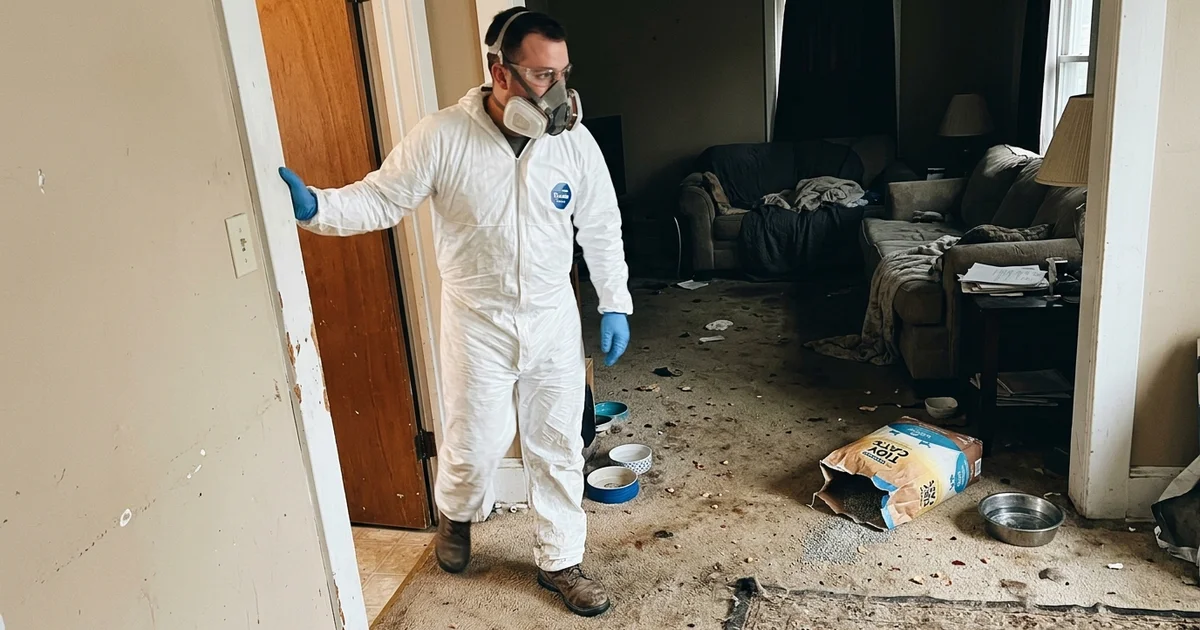
Animal hoarding situations are frequently described as smelly, dirty, or overwhelming. Those are accurate and they understate the problem considerably.
What separates an animal-waste environment from an ordinary very dirty house is that it contains three distinct hazard categories at once: a chemical hazard from concentrated ammonia, an infectious hazard from zoonotic pathogens, and a respiratory hazard from dander, spores, and particulate. Each one requires different protection, and none of them are addressed by working faster.
This is why Animal Hoarding & Feces Remediation is remediation work rather than cleaning, and why our first action on these calls is an air reading rather than a walkthrough.
The chemical hazard: ammonia
Urine breaks down into ammonia. In a home with multiple animals, a closed envelope, and saturation built up over months or years, the airborne concentration can climb well past the point of discomfort.
At moderate concentrations ammonia causes stinging eyes, burning throat, coughing, and headache. At higher concentrations it produces chemical irritation of the airway, and people with asthma or existing respiratory conditions are affected much sooner than they expect.
The dangerous characteristic is that people acclimatize. Somebody who has been in the property regularly stops noticing the smell, which removes the only warning signal they have.
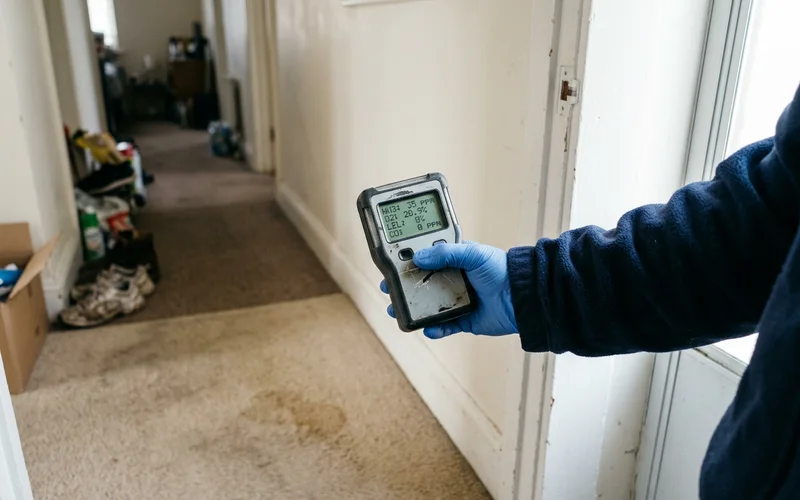
We read the air before anyone goes in
A 4-gas monitor takes a reading for ammonia, hydrogen sulfide, carbon monoxide, and lower explosive limit at the doorway. It takes two minutes and it has kept more than one homeowner out of an emergency room.
The infectious hazard: zoonotic pathogens
| Pathogen | Source | Route |
|---|---|---|
| Toxoplasmosis | Cat feces | Ingestion of oocysts, hand to mouth after contact |
| Hantavirus | Rodent droppings, urine, nesting material | Inhalation of aerosolized particles |
| Leptospirosis | Animal urine on surfaces and in water | Broken skin, mucous membranes |
| Salmonella and Campylobacter | Feces of many species | Hand to mouth |
| Roundworm and hookworm | Feces, contaminated soil and carpet | Skin contact, ingestion |
Toxoplasmosis is the one with the most serious implications for specific groups. Pregnant women and immunocompromised people should not enter these environments at all, and that guidance is not precautionary politeness.
Hantavirus deserves particular attention because of how it transmits. Dried rodent droppings become airborne when disturbed, which means sweeping is precisely the wrong action. HEPA-filtered vacuuming is the correct approach, and it is one of the clearest practical differences between a remediation crew and a cleaning crew.
The respiratory hazard
Beneath the infectious risks sits a simpler one. Animal dander, dried fecal particulate, and mould spores from saturated carpet and subfloor all become airborne during any disturbance of the material.
For a healthy adult this produces irritation and a rough few days. For someone with asthma, COPD, or a compromised immune system it can produce a genuine medical event. We have been called to properties where a family member developed a persistent respiratory problem after a weekend of trying to clear a relative’s house themselves.
What adequate protection actually requires
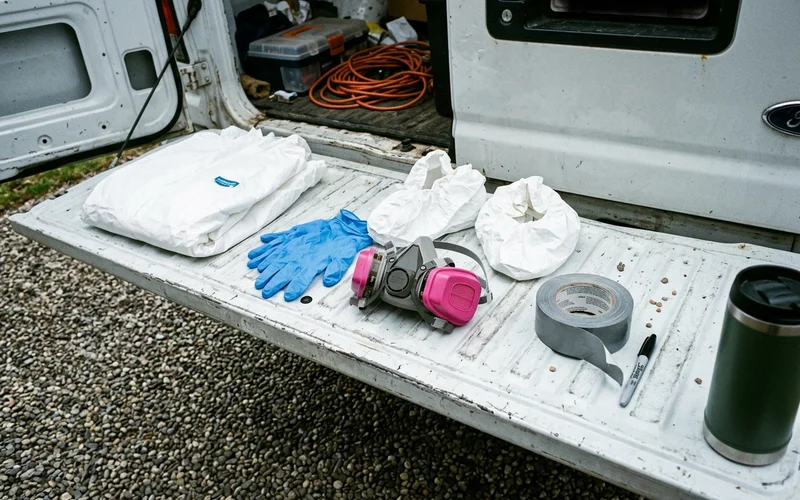
Not a dust mask and rubber gloves. Meaningfully, it requires:
- A fit-tested respirator with cartridges appropriate to ammonia and particulate
- Full skin coverage with a protective suit, gloves, and boot covers
- Eye protection sealed against vapour
- Atmospheric monitoring before and during work
- A defined doffing sequence and decontamination on exit
- HEPA negative air to control airborne particulate during the work
That is a genuine barrier for a homeowner, and it is meant to be. The equipment is not the hard part; the training in how to use it without contaminating yourself on the way out is.
Why this is not a judgment on the person
Animal hoarding almost always begins as someone trying to help. One stray becomes three, three become a litter, and the person keeps taking them in long past the point where they can care for them, because the alternative feels like abandonment.
That is the pattern in nearly every case we attend, and it is why our crews do not comment on what they find. The health risks in this guide are a description of a physical environment, not a verdict on anyone.
If you are dealing with a property like this, our guide on cleaning cat urine, pet feces, and rodent contamination safely covers the remediation process itself, including what can be saved and what cannot.