
The mistake almost everyone makes first
Somebody shampoos the carpet. The stain lifts, the room smells better for a few days, and then it does not.
The reason is simple and it is worth understanding before you spend money on anything. Urine does not sit in the carpet. It goes through the carpet, into the padding, and into the plywood or plank subfloor underneath, where it crystallizes. Cleaning the top layer removes the evidence and leaves the source entirely intact.
Resolving it properly is Animal Hoarding & Feces Remediation work, and the process below is the sequence that actually produces a permanent result.
Step 1: Atmospheric assessment
Before anyone enters, we take a 4-gas reading at the doorway for ammonia, hydrogen sulfide, carbon monoxide, and lower explosive limit.
In heavily affected homes the ammonia reading alone determines what happens next. Sometimes that means ventilating before any work starts, and occasionally it means telling a property owner not to go in at all until we have.
Step 2: Mapping saturation depth
This is the step that decides the scope and the price, and it is the one a phone quote cannot do.
We lift flooring at the edges of visibly affected areas and assess how far urine has travelled: carpet only, carpet and padding, into the subfloor, or through the subfloor to the joists. A UV light helps identify contamination that is not visible in normal light, particularly where a previous attempt at cleaning has removed the staining without removing the source.
| Depth | What it means for scope |
|---|---|
| Carpet only | Rare in hoarding situations, usually indicates recent damage |
| Carpet and padding | Removal of both, substrate treated and sealed |
| Into subfloor | Flooring removed, enzymatic treatment, antimicrobial seal |
| Through to joists | Subfloor section cut out and replaced, framing treated |
What photographs cannot show
A photograph shows a stain. It cannot show depth. This is why our estimate states where conditions may change once flooring is lifted, and why we stop and get written approval before doing work beyond the agreed scope.
Step 3: Removal
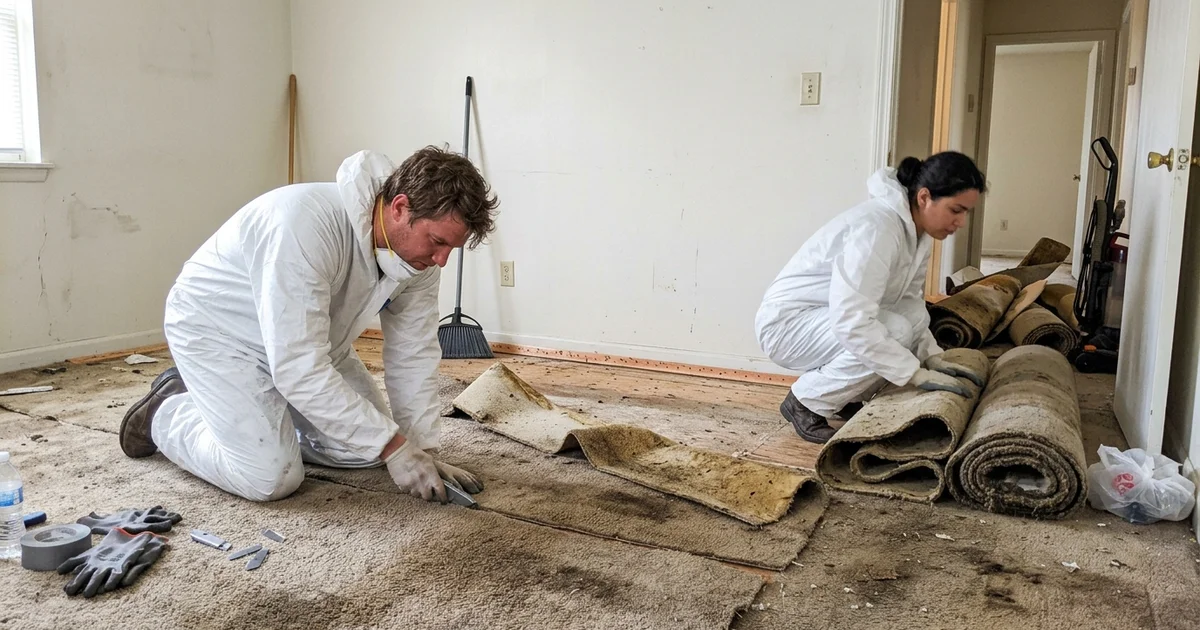
Saturated carpet and padding are cut into manageable sections, rolled, bagged, and removed. Contaminated furniture, bedding, and porous belongings go the same way.
Feces and gross filth are extracted rather than swept. Where rodent activity is present, droppings and nesting material are HEPA-vacuumed rather than brushed, because dried rodent waste aerosolizes hantavirus when disturbed. This is a genuine and consequential difference in method, not a technicality.
Step 4: Enzymatic treatment
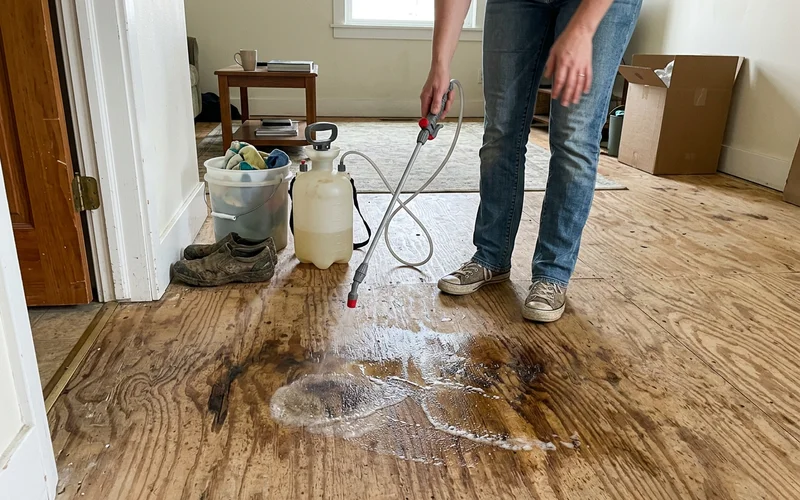
With the substrate exposed, a bio-enzymatic cleaner is applied in overlapping passes and given the dwell time the product requires.
Enzymes break down uric acid crystals at a molecular level, which is something detergents cannot do. This distinction matters: a detergent lifts and suspends soil so it can be rinsed away, but uric acid crystals bound into wood grain are not soil and do not lift. They have to be broken down chemically.
Dwell time is where most attempts fail. The product needs contact time measured in tens of minutes, not a spray and a wipe.
Step 5: Sealing
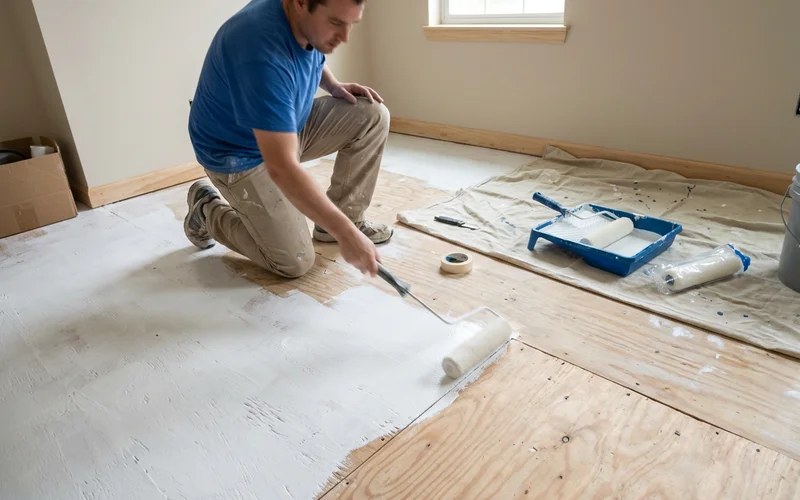
Once treated and dried, the subfloor is sealed with an antimicrobial primer sealant.
This is the step that makes the result permanent. Sealing locks down any residual compounds so they cannot re-release into the air as humidity and temperature change. A remediation without sealing smells resolved in October and does not in January.
Step 6: Odor neutralization and verification
With the source removed, treated, and sealed, air treatment finally does something durable. Hydroxyl generators run in properties that will be occupied. Ozone chambering is used in empty properties, with a proper sealing and ventilation protocol.
We confirm resolution before releasing the property, and the documentation goes into your Client Portal.
What can and cannot be saved
Honest answers, because people ask about specific items.
Usually salvageable: hard furniture with sealed finishes, metal, glass, ceramics, sealed hard flooring where saturation did not reach the substrate, and most items that were stored above the contamination line.
Usually not: carpet, padding, mattresses, upholstered furniture, particleboard furniture, and anything porous that sat in contact with saturated flooring.
We will tell you which is which rather than disposing of things by default, and anything questionable is set aside for you to decide on.
For what happens after remediation when the goal is selling or re-letting the property, our guide on restoring a pet-damaged home to market-ready condition covers the path from contaminated to sellable.