
Why this question is hard to answer from the doorway
Almost everyone who searches this is asking about someone they love. A parent whose spare room has filled up. A sibling who has not let anyone past the kitchen in two years. A friend whose garage stopped opening.
The instinct is to compare the house to a television programme and decide it is not that bad yet. That comparison is not useful, because the diagnostic line is not about volume. It is about function and distress.
If safety is already compromised, the work is Hoarding Cleanup and it is remediation rather than tidying. But the first thing worth doing is understanding which side of the line you are actually on.
What clutter is
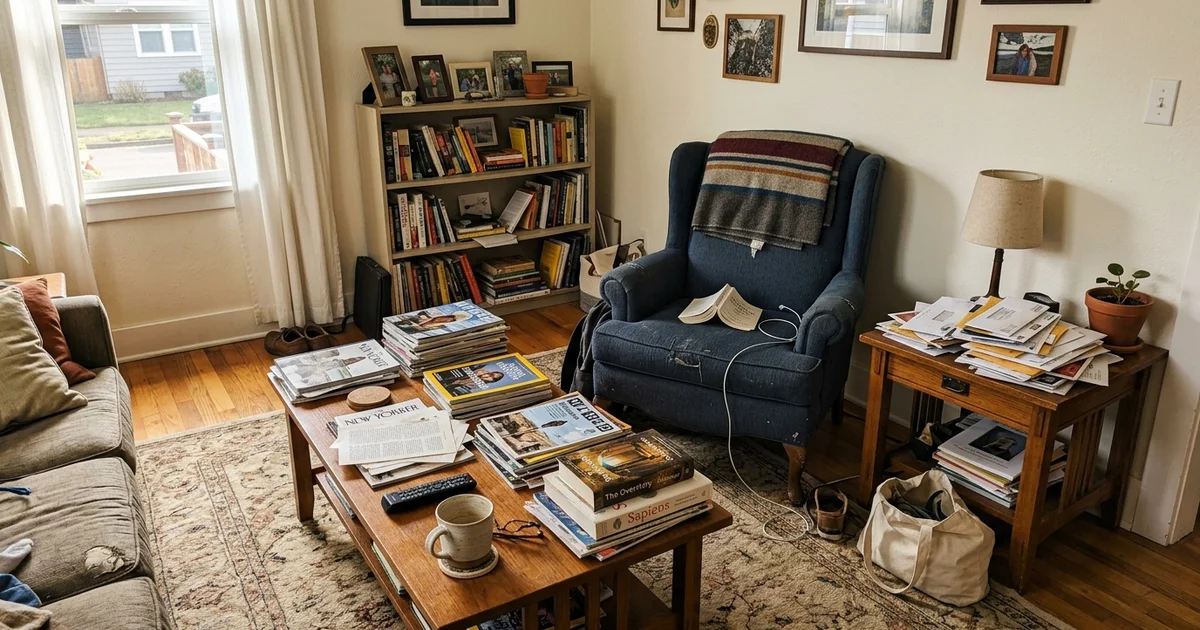
Clutter is accumulation that the person can manage when they decide to. The spare room is full, but if they need the space they will clear it. Discarding things is annoying rather than distressing. Rooms still perform their function: you can cook in the kitchen, wash in the bathroom, and sleep in the bed.
A cluttered house may look chaotic and still be entirely fine. Busy households with children, hobbies, or a small business run this way for decades without a problem.
What hoarding disorder is
Hoarding disorder is recognized in the DSM-5 as a distinct diagnosis. The core features are:
- Persistent difficulty discarding possessions, regardless of their actual value
- A perceived need to save the items and distress at the thought of parting with them
- Accumulation that congests living areas and substantially compromises their intended use
- Significant distress or impairment in functioning as a result
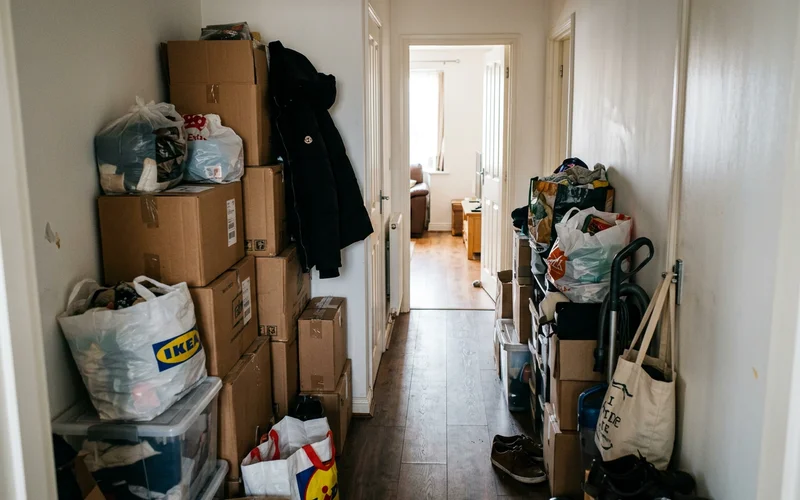
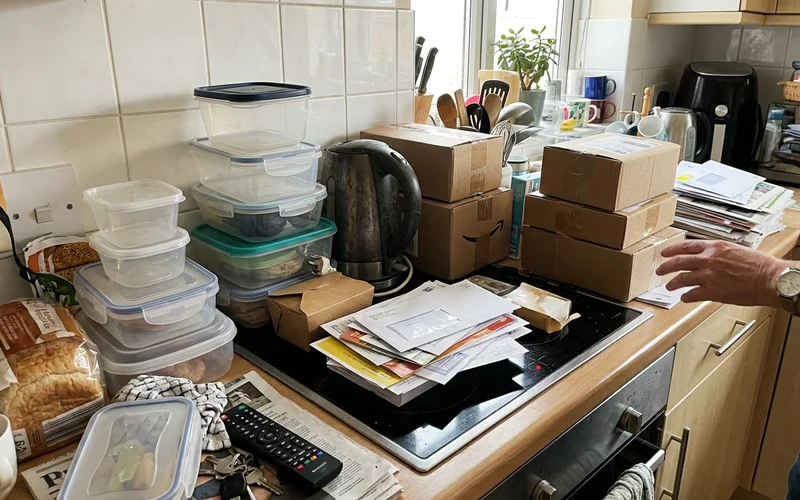
That third point is the practical test. Not how much is there, but whether the space still works. A dining table that cannot be eaten at. A bath that cannot be filled. A bed that has three feet of usable surface.
It is a medical condition, not a housekeeping failure
This matters for how you approach the conversation, and it matters for how a cleanup crew should behave in the house. Anyone who treats it as laziness will make the situation worse.
The warning signs that actually predict a problem
| Signal | Why it matters |
|---|---|
| Paths rather than floors | Accumulation has reached structural volume, not surface mess |
| A room no longer used for its purpose | The formal DSM-5 threshold for compromised living space |
| Refusal to let anyone inside | Shame and secrecy are core features, and they accelerate the spiral |
| Blocked exits or windows | A serious fire risk that fire services encounter frequently |
| Stacks against exterior walls | Trapped moisture, mould, and eventual structural damage |
| Expired food kept | Difficulty discarding has extended past sentimental items |
| Pest activity | Sanitation has crossed into biohazard territory |
| Mail unopened for months | Often the earliest visible sign to an outside family member |
You do not need all of these. Two or three together generally means the situation has moved past clutter.
When to act
Act when safety is compromised. Specifically: blocked exits, a non-functioning kitchen or bathroom, fire load, pest infestation, or any sanitation issue involving waste. Those are not aesthetic problems and they do not resolve on their own.
Act sooner if the person is elderly, has mobility limitations, or lives alone. A narrow path is survivable at forty and a fall risk at seventy-five.
Act immediately if there is a health department notice, a code citation, or a landlord’s letter. Those come with deadlines.
What to do next, in the right order
Do not clear the house while they are out. It feels efficient and it is the single most damaging thing you can do. Forced cleanouts cause real trauma and have a high relapse rate, and they very often end the relationship.
Start with a conversation about safety rather than mess. Involve a mental health professional if the person is open to it. In Cuyahoga County, the Hoarding Connection of Cuyahoga County is a local resource worth knowing about.
Then, when the person is ready, bring in a crew that understands what they are walking into. Our guide on the five levels of hoarding will help you work out where the home actually sits on the ICD Clutter-Hoarding Scale, and what that means in practice.
If you want to talk it through first, call. We have this conversation constantly and we will not push you toward a booking you are not ready for.